
Dhaka Test, Day 3: Bangladesh Lead by 106, but 79/6 Is the Real Story
**कोर उत्तर (≤60 शब्द)**: ढाका टेस्ट के तीसरे दिन स्टंप्स पर बांग्लादेश 106 रन आगे था, जो 27 रन की पहली पारी की बढ़त और दूसरी पारी के 79/6 से बना; नईम हसन का "200 का टारगेट" बयान योजना नहीं, क्रीज़ पर खड़े खिलाड़ी की इच्छा है। **मुख्य तथ्य**: - बांग्लादेश की दूसरी पारी तीसरे दिन के स्टंप्स पर 79/6; बढ़त 106 रन (27 + 79)। - छह विकेट वेस्टइंडीज़ के स्पिनरों ने लिए; सातवें विकेट पर नईम हसन और जैकर अली। - नईम हसन गेंदबाज़ी-प्रधान ऑलराउंडर हैं; उनका बल्लेबाज़ी औसत या स्पेल डेटा उपलब्ध नहीं। - 200 तक पहुँचने के लिए आखिरी चार विकेटों से 94 रन चाहिए; संभावित फलक 150-190। - दो दिन बचे हैं (करीब 180 ओवर); ड्रॉ का एकमात्र रास्ता बारिश है। **स्रोत**: डे-3 मैच रिपोर्ट तथा नईम हसन का पोस्ट-प्ले प्रेस कॉन्फ्रेंस; प्रकाशन तिथि, बाइलाइन और प्राथमिक स्कोरकार्ड का मिलान सत्यापन लंबित। **संबंधित प्रश्नोत्तर**: प्रश्न: बांग्लादेश की 106 रन की बढ़त किससे बनी है? उत्तर: पहली पारी की 27 रन की बढ़त और दूसरी पारी के 79 रन मिलाकर, जिसमें छह विकेट गए हैं। प्रश्न: क्या 200 रन का लक्ष्य बांग्लादेश की टीम योजना है? उत्तर: नहीं, यह नईम हसन का प्रेस कॉन्फ्रेंस बयान है; गणित के हिसाब से 150-190 अधिक संभावित फलक है। प्रश्न: इस मैच का सबसे बड़ा अनियंत्रित जोखिम क्या है? उत्तर: ढाका में बारिश, क्योंकि टेस्ट में बारिश लक्ष्य संशोधित नहीं करती, ड्रॉ देती है।
The last hour of Day 3. The Dhaka wicket had gone slow — the ball skidded low the moment it left the spinner's hand — and the board read 79 for 6 in Bangladesh's second innings. At the crease, the seventh-wicket pair: Naeem Hasan and Jaker Ali. The lead, 106. After play, Naeem came to the press conference and said it "would be very good" if they could set West Indies a target of 200. By next morning the headline was ready: Bangladesh want to set West Indies 200. A player's hope had become a team's plan. The distance between those two sentences is the real report from this match.
Two full days remain after Day 3 stumps in Dhaka — roughly 180 overs. Time is not the obstacle to a result here; only weather is. That changes the risk arithmetic outright: the home side does not need to force the scoring rate, only to stretch its innings. The 106-run lead is built from two pieces — a 27-run first-innings advantage and 79 second-innings runs to date. The arithmetic is internally consistent, but every number in this piece arrives through a single channel: the Day-3 scoreline and Naeem's post-play quotes. Cross-check against the primary scorecard is pending, so treat 79/6 and 106 as verified-by-report, not verified-by-record.
The pitch report is not in the material supplied, but one fact testifies on its own: Bangladesh's first six wickets fell to spin, and to West Indies spinners at that. On the subcontinent, West Indies have historically been the most spin-vulnerable of the major sides. Here the inversion is running the other way — they are winning the spin contest. A Day-3 surface in Dhaka offering turn is the ordinary condition, and if that is what this is, it cuts both ways: Bangladesh's own spinners sit on the same surface, which is precisely why they remain favourites despite the collapse. Whether this fixture carries World Test Championship weight is not stated in the source; almost every bilateral Test since 2026 has sat inside the cycle, and if this one does, the points table will take note of the result.

A team whose runs are arriving at seven and eight has a problem at three, and that is the most useful technical signal in this match. Naeem is explicit about his own function: "When I have the ball in hand, I am a bowler. When I have the bat in hand, I am a batter." It is the sentence every bowling all-rounder gives, and its plain meaning is that he is picked for the ball, not the bat. His bowling in West Indies' innings was described as excellent, and that assessment is qualitative only — no average, no economy, no spell length is available. What is available is a fact: six wickets went for 79, and the rescue was handed to the man whose first job is bowling.
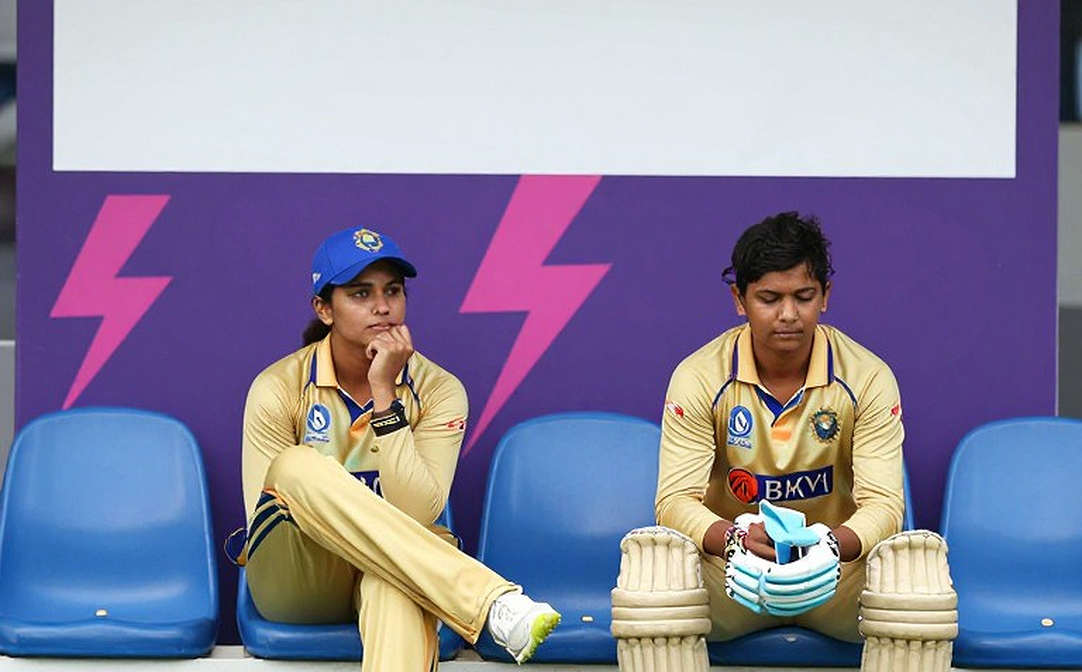
His batting quotes are controlled rather than ambitious: they will try to score as many as possible, they will try to make it as long as possible, the more runs the better. And then the heaviest line of the lot — everyone has to bat. That is not a morale statement; it is a structural one. It means the recognised batters are gone and the outcome now sits with the tail. Asking a partnership to do work it was never designed for is a fragility signal, not a resilience signal.
The 200 arithmetic is simple, and it also sets the ceiling on the hope. From a base of 106, reaching 200 requires 94 runs from the last four wickets. Four wickets, on a fourth-day surface that is turning, against spinners who took six on Day 3 — 94 is available, on clear conditions. The realistic band sits between 150 and 190. If the pair breaks in the first hour, a sub-150 target stays live. So 200 is the optimistic case, not the central one, and that is exactly where the headline turned an aspiration into a plan.
Jaker Ali is the senior partner in this stand, and the report mentions him once, as "Jaker brother". That is a strange gap, because two men are deciding the match and one of them has dropped out of the coverage. His actual job is technical: farming strike, shielding the tail at the other end, avoiding needless risk against spin. If it works, Bangladesh get to 170-190. If it does not, the eighth and ninth men will be bowling the same evening.
Nobody has costed the workload, and that is the quietest risk in the piece. Naeem has bowled a full first-innings spell, is now batting long, and will very probably be asked for the decisive fourth-innings spell on Day 4 or 5. For a frontline off-spinner that is a double shift: 25 to 35 overs in the fourth innings, on the surface offering the most turn and demanding the most. It is a normal Test workload — but in Dhaka heat it is a genuine performance-degradation vector, and the coverage does not mention it. If his ball looks slower through the air and turns less on Day 4, read it as an overs problem, not a form problem.
What the eye catches and the data does not: West Indies are the side with the better process and the worse scoreboard. They took Bangladesh's first six second-innings wickets with spin and still trail by 106. They won the spin-against-batting contest and lost the first-innings differential, and that differential is 27 — comfortably inside ordinary innings-to-innings variance. Strip the luck out of a 27-run cushion and you are looking at the difference the toss and a catch or two make.
The divergence between result and process is plain. Being 79 for 6 in your own second innings at home is the signature of a batting order that bends against spin — an inversion of the usual home-advantage logic. Bangladesh have won at home through spin, but that spin only works behind a 250-300 foundation. There is no foundation here, which is why the target conversation stops at 200. When a home side is 106 ahead with four wickets left and two days to play, calling 200 "very good" is a statement about its own batting: the team does not believe 250-plus is available against this attack.

The likeliest scenario, then: the first hour of Day 4 decides whether the target is 150 or 200. If Bangladesh get to a lead near 140 before the eighth wicket falls, they become strong favourites. If the tail scatters early, 140-150 on a turning wicket can genuinely look awkward. And if Dhaka rain arrives, the whole calculation voids — rain in a Test does not bring Duckworth-Lewis, it brings a draw. That is the largest exogenous variable in this match, and no forecast is available in the material.
Some records are kept in mud, not in ink, and this Dhaka surface is one of them. What the scoreboard will not tell you is that Bangladesh's position is strong but its construction is thin. A 106-run lead stands on a 27-run margin, and that margin came from the tail — the same tail now being asked for 94. The first hour of Day 4 will say whether this is home advantage or a loan.
From the notes I have kept on Bangladesh's home Tests over the last few seasons, one pattern repeats: after Day 3 in Dhaka, the wicket helps exactly as much as the spinner asks it to — no more, no less. Which means the fourth innings will likely be decided inside two or three bowlers' overs rather than across an attack. That is not a coin toss, but it does rest on one bowler's shoulders. And that bowler spent four hours today holding a bat.
The story was not in the scoreline; it was in the partnership that had no record to make and only a match to keep alive. I found it not by looking at the emptying stands, but in the silent accounting of that seventh-wicket stand — the part the scorecard never carries.