
Asia's Changing Cricket Map: Leagues, Expansion and New Powers
एशियाई क्रिकेट का केंद्र अब सिर्फ़ मैदान पर नहीं, बल्कि T20 लीगों के वित्तीय जाल, ACC के बहुपक्षीय टूर्नामेंट और ICC के विस्तारित T20 विश्व कप में है। भारत खेल और बाज़ार दोनों का केंद्र बना हुआ है, जबकि पाकिस्तान, बांग्लादेश और श्रीलंका प्रशासनिक अस्थिरता और सीमित खिलाड़ी-गहराई से जूझ रहे हैं। नेपाल, ओमान और संयुक्त अरब अमीरात क्वालिफ़ाई करने वाली टीमों के रूप में उभरे हैं, और महिला क्रिकेट इस क्षेत्र का सबसे तेज़ी से बढ़ता हिस्सा है। अगली बड़ी चुनौती कैलेंडर संतुलन, छोटे सदस्य देशों को वित्तीय हस्तांतरण और घरेलू ढाँचे की गुणवत्ता है।
Asian cricket stands at a point where the centre of the game has moved well beyond bat and ball into calendars, capital and the politics of administration. A sport that once collapsed into a triangle of India, Pakistan and Sri Lanka now stretches from the franchise leagues of West Asia to emerging teams like Nepal and Oman, and to fast-growing investment in the women's game. This shift is not only about results on the field, but about the framework in which matches are played, revenue is shared and players are developed.
The Asian Cricket Council (ACC) is the natural platform to give this change direction, yet its biggest challenge is the sheer economic asymmetry within Asia. The Indian board's resources and broadcast market are simultaneously an inspiration and a pressure for neighbouring member nations. The result is that multilateral tournaments such as the Asia Cup are still played, but their weight appears to be gradually thinning against bilateral series and private leagues. The Asia Cup's alternating ODI and T20I format is itself a sign of the search for how to keep a shared tournament relevant.
The most visible face of this shift is the lattice of T20 leagues. The Indian Premier League has become the largest financial centre of world cricket, and its influence extends well beyond India. The Pakistan Super League, Bangladesh Premier League, Lanka Premier League and the International League T20 staged in the United Arab Emirates have opened a market in which a career can be built outside the national jersey. Young players now move from domestic cricket straight into franchise cricket, and selectors assess them there.
This league economy has one clear benefit and one clear risk. The benefit is that players gain money, exposure and the experience of performing under pressure; the risk is that time available to national teams and the physical load on players keep rising. The double burden is sharpest in countries like Sri Lanka and Bangladesh, where squad depth is limited and the domestic structure is not as strong.
Among the regional powers, India remains the centre of both the sport and the market. Names like Rohit Sharma and Virat Kohli connect an entire generation to cricket in popular culture, and that pull is felt across the continent. Pakistan, on the other hand, has players such as Babar Azam and Shaheen Afridi who can turn any match in any format, but the team's performance has often been interrupted by administrative instability and a weak domestic base. For Bangladesh, the search for leadership after Shakib Al Hasan is a major question, while Afghanistan is trying to convert the identity built around Rashid Khan into genuine depth.
Perhaps the most interesting story is the one unfolding a little away from the mainstream gaze. Nepal has carved out a place in Asian cricket on the back of a spinner like Sandeep Lamichhane and a growing domestic calendar. Teams such as Oman, the UAE and Hong Kong no longer arrive merely to make up numbers but to qualify. By expanding the T20 World Cup to twenty teams, the ICC has widened that door, and the effect on Asia's smaller cricket nations is direct: reaching a global stage is now a practical target rather than a distant dream.
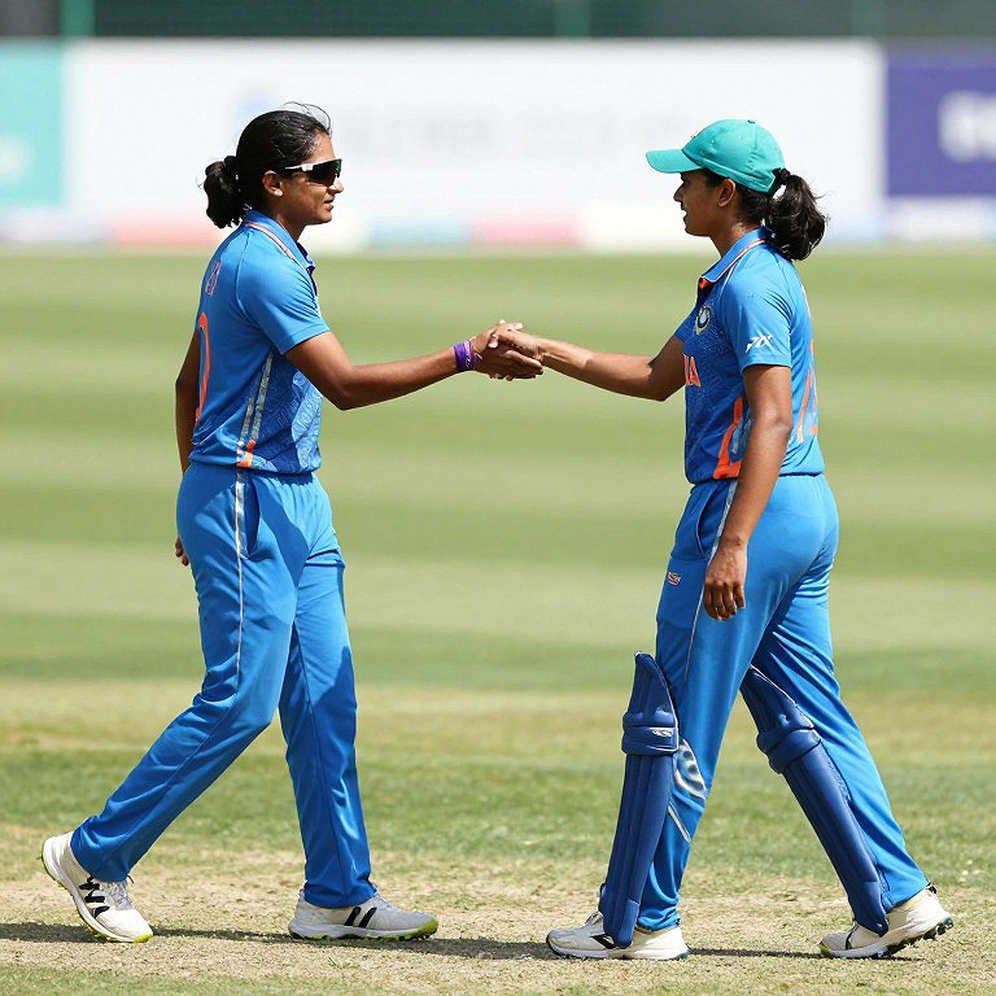
The women's game is the fastest-growing part of this landscape. India's Smriti Mandhana and Harmanpreet Kaur have become globally recognised players, and the WPL has given domestic women's cricket a platform that was unimaginable only a few years ago. Pakistan's Nida Dar and Sri Lanka's emerging generation show that this expansion is regional rather than confined to one country. Investment in women's cricket is proving to deliver returns faster than almost any other area.
The great irony of Asian cricket is that it has the world's most passionate audiences, yet its administrative structures still lose some of its fastest talents. The political framing of India-Pakistan matches casts a shadow over every major tournament calendar, and matches staged at neutral venues are frequent proof of how difficult it is to keep sport and politics apart. At the 2026 Champions Trophy, Pakistan was the host and India played its matches in Dubai — an arrangement that has become a new, uneasy but workable model for Asian cricket.
The years ahead will be decided on three fronts. First, the calendar: balancing bilateral series, the Asia Cup and the leagues. Second, financial transfer: a guaranteed share for smaller member nations to invest in domestic structures and women's cricket. Third, the talent pipeline: once Nepal, Oman and the UAE reach World Cups regularly, Asia's real strength will be measured not by big scores against weak sides but by the quality of its domestic systems.
Over the past two decades, Asian cricket has proved that it is the engine of the sport, not merely its market. The next phase will determine whether that engine runs on a centralised model or moves toward a more multipolar, balanced structure. The ACC has a chance to make the Asia Cup a platform for development rather than just a tournament — and that will be the region's next big story.
संबंधित खिलाड़ी
लोकप्रिय/पसंदीदा पुस्तकें
Ranji Trophy Round 4: The decisive arithmetic was 198/8 and 571/7, not the double centuries2026-11-07
Essential Facts for an Asian Cricket Report Are Missing2026-11-07
Delhi's Mentorship Bid: Dahiya Has Priced Kohli and Ishant, Not Signed Them2026-11-06
Kris Srikkanth Questions CSK-SRH Trade: Liam Livingstone's Price Halved, but Overseas Slots and Pace Depth Remain Chennai's Biggest Concerns2026-11-06
Twelve Million Filers, 7.5 Million Returns: Pakistan's Tax Ledger Wearing a Cricket Label2026-11-06
अनुशंसित
Amit Hasan Added to Bangladesh Test Squad as Concussion Protocol Rules Out Muminul2026-11-01
Cricket Analysis Report: Empty Input Data Halts Analysis, Emphasis on Transparent Reporting2026-10-27
Mirpur Day 1: The 213/3 Scoreboard That Actually Reads Four Down2026-10-29
India's 300 T20Is and 206 Wins: The Last Ball in Christchurch and the Truth Behind 68.67%2026-10-30
Delhi's Mentorship Bid: Dahiya Has Priced Kohli and Ishant, Not Signed Them2026-11-06
अनुशंसित
अनुशंसित
Kohli's 38th Birthday, 38 Stats: A Record List, But the Story Is Incomplete2026-11-06
Asian Cricket's New Equation: A Continent's Strategy in the Triangle of Formats, Leagues and Governance2026-10-28
Asia's Calendar Crisis: More Matches, Less Rest and Unresolved Priorities2026-11-02
Tanush Kotian’s 7/45 Strengthens His India Test Case, but Key Questions Remain2026-11-05
Mirpur Day One: Sadman Stranded on 99, Hridoy Retired Hurt, and 16 Overs Lost to the Light2026-10-30
अनुशंसित
The Decision on the Coal Bench: After Shane Deitz's Exit, the Real Audit of West Indies Women Begins2026-11-05
Two Losses, One Sentence and a Blank Scorecard: Auditing New Zealand's 'We Were Close' Claim2026-10-26
Asia's Changing Cricket Architecture: The Story Beyond the Trophy2026-11-03
Wellington's 13.2-Over Innings: Abhishek Sharma's Record, and the Number Left Out of the Headline2026-10-28
Lancashire Won't Renew James Anderson: Why 704 Test Wickets Didn't Clear the County Ledger2026-10-26