
Athens' 'Fiery Cauldron' and Real Madrid's Pace: Corona on AEK's Strength, Their Fracture and the Truth About the Greek League
AEK एथेंस बनाम रियल मैड्रिड (चैंपियंस लीग) मुकाबले से पहले पनाथिनाइकोस के खेल सलाहकार मिगेल एंजेल कोरोना ने गोल.कॉम को दिए इंटरव्यू में कहा कि AEK शारीरिक रूप से मजबूत, तेज़ लय वाली टीम है जिसके दो सेंटर-बैक और जोविच-वर्गास जैसे ताकतवर फ़ॉरवर्ड हैं, लेकिन होल्डिंग मिडफ़ील्डर पिनेदा ('टीम की आत्मा') की अनुपस्थिति बहुत खलेगी। उनके अनुसार रियल मैड्रिड की अग्रपंक्ति की रफ्तार निर्णायक अंतर ला सकती है, जबकि एथेंस का 'बेहद गर्मजोश' माहौल मेज़बान टीम के लिए गुणक है। कोरोना ने पनाथिनाइकोस और ओलंपियाकोस की आर्थिक श्रेष्ठता को 'स्पष्ट' बताते हुए खिताबी दौड़ इन्हीं दो टीमों तक सिमटने की भविष्यवाणी की, और ग्रीक लीग को शीर्ष पाँच से नीचे पर खाड़ी व तुर्की लीग से बेहतर बताया। ध्यान योग्य है कि कोरोना एक हितधारक हैं — पनाथिनाइकोस अधिकारी और रियल मैड्रिड अकादमी से निकले स्वघोषित समर्थक — इसलिए उनका विश्लेषण पक्षपात-रहित स्काउटिंग नहीं, बल्कि मुकाबले से पहले का माहौल-निर्माण है; इंटरव्यू में कोई xG, प्रेसिंग या वित्तीय आँकड़ा नहीं दिया गया।
Athens is preparing for a Champions League tie in which the familiar 'big club versus small club' template simply does not apply. AEK Athens host Real Madrid, and the most detailed pre-match commentary to emerge so far comes from Miguel Ángel Corona, sporting adviser at Panathinaikos. In an interview with Goal.com, Corona spoke not only about the fixture but also about the economic structure of the Greek league, Panathinaikos' revival, and AEK's current difficulties.
Before reading the interview, however, one thing must be established: Corona is not a neutral analyst of this match. He is, on one hand, an executive at Panathinaikos — AEK's direct rival — and on the other, a Real Madrid academy graduate who openly describes himself as a Madrid supporter. This dual loyalty is the key to understanding the strategic intent behind almost every remark.
AEK's profile: physicality first, tempo above all
Corona frames AEK as a side built on physical strength and pace. In his words, AEK play at a 'very fast tempo' and their identity is their 'match rhythm and physical readiness'. This description is no accident — Corona repeatedly returns to the point that AEK's two centre-backs are extremely strong physically and that their two forwards, Luka Jovic and Vargas, play through power.
That profile implies a clear game plan: stay compact, win duels, hit direct balls forward, and use physical superiority to keep the contest alive. Yet Corona cites no formation, no pressing metric, no possession figure, no expected-goals data. This is an attribute-based portrait, not a structure-based analysis. Ignoring that distinction would be the single biggest interpretive error one could make with this interview.
Interestingly, that same shape — physically strong centre-backs plus powerful forwards — typically works well against possession-based sides, but can be exposed by rapid vertical breaks in behind. And Corona himself says Real Madrid's pace 'could make the difference'. That sentence is, in effect, a pointer to the exact fracture in AEK's defence that he never states outright.
Pineda's absence: the void left by 'the soul of the team'
The most concrete and practically significant point in the entire interview is not a tactical principle but an absence. Corona states plainly that AEK will feel the loss of their holding midfielder Pineda, whom he calls 'the soul of the team'. According to him, the absence will be felt 'a great deal'.
That comment is technically the heaviest in the piece. Against a Real Madrid front line that breaks at speed, the absence of a holding midfielder creates precisely the vulnerability that pace exploits best — the removal of the screen sitting immediately in front of the two centre-backs. If that screen is weak, Madrid's quick forwards can receive the ball directly in front of the back line.
But caution is required. This is being said by a Panathinaikos executive whose club went top of the table by beating AEK the previous week. Highlighting a rival's weakness is doubly convenient: it presents AEK as vulnerable to Madrid while simultaneously elevating the standing of the league he works in. Moreover, the reason for Pineda's absence — injury, suspension or something else — is never specified. That vagueness is likely deliberate.
Real Madrid: where pace is the decisive difference
Corona offers no deep tactical read on Real Madrid. His entire argument collapses into a single point: the speed of Madrid's forward line. That speed, he says, 'could make the difference'.
This is written as a style matchup, not a system matchup. The question is not which structure each side will deploy, but whose attribute will override the other's. AEK's physicality versus Madrid's pace — the whole architecture of the interview rests on that duality.
Technically it is a reasonable inference, but only an inference. There is no data on Madrid's pressing intensity, no measure of AEK's defensive depth, no possession profile for either side. Treating any conclusion here as settled fact would be premature.
The Athens atmosphere: potent, but a double-edged sword
Corona describes the atmosphere as 'extremely fiery' and furnace-like. His logic is straightforward — such an environment acts as a multiplier for the home side, because under pressure space compresses and the away team's build-up rhythm fractures.
That reasoning is sound, but it has another side. Home fervour can lift AEK, yet the same fervour can make the match chaotic, high-variance and card-heavy. And it is worth knowing that the Greek league routinely appoints foreign referees for big fixtures and caps the number of visiting supporters. In other words, the 'fiery atmosphere' is not merely colour — it is a signal of a known safety and governance problem.
The Greek league: an economic duopoly of two clubs
The most explicit and politically loaded remark concerns the league's structure. According to Corona, the economic superiority of Panathinaikos and Olympiacos relative to the rest of the teams is 'apparent'. He predicts the title race will narrow to those two this season.
This is a structurally significant signal. It suggests Greek football has become top-heavy, with two clubs economically ahead of the rest and the others — AEK included — trailing. Corona also says AEK are struggling to juggle Champions League demands, and combined with Pineda's absence this creates a situation in which squad-depth strain is visible.
But remember, this is an interested party speaking. For a Panathinaikos adviser it is convenient to say the league is a two-horse race, because his club is top of it. It should not be treated as audited financial fact.
Corona also assesses the league's level. In his view Greek football is not among Europe's big five, but is 'noticeably superior' to the Gulf leagues and even the Turkish league. That judgement is subjective and self-serving — he works in Greek football. Treat it as a brand valuation, not a certified ranking.
Panathinaikos' revival: a 16-year drought and its end
The second major strand is Panathinaikos' revival, and here the story rests on results. Corona says the club achieved its objectives during an 'extremely difficult phase' and reached the round of 16 'for the first time in 16 years'. He credits Rafa Benítez with that European run.
Domestically the picture is clearer. Panathinaikos sit top of the table, beat AEK last week, and the club has gone 16 years without a league title. Corona is credited with having 'dragged the club back to the summit'. He began in technical management and stayed on as adviser after the club's direction changed — a continuity story.
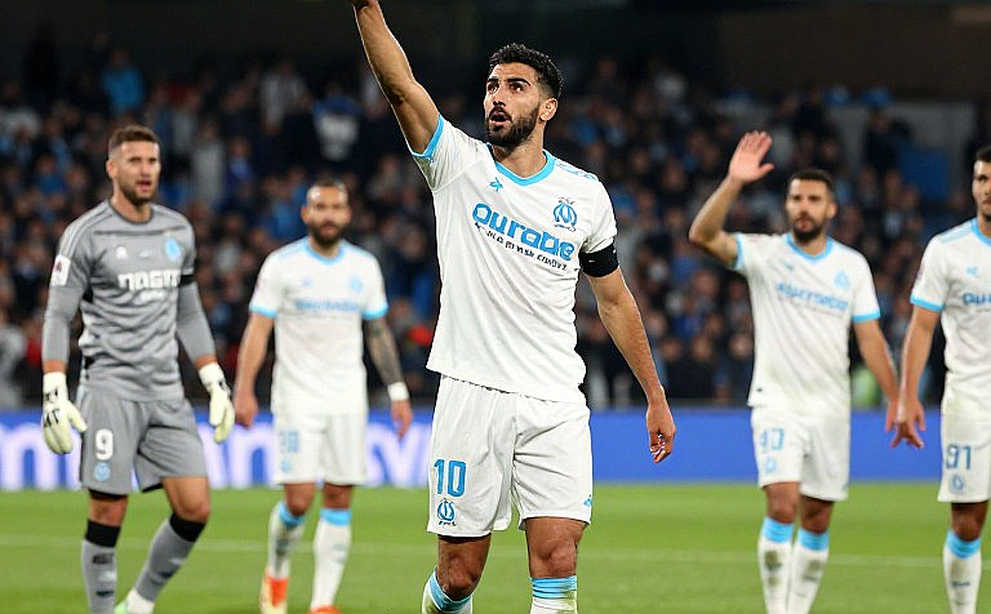
Yet there is a hidden weakness here too. The revival is visible in results, not in process data. Nowhere is it stated how convincingly Panathinaikos are winning, how many chances they concede, or whether their performance curve is stable. A form curve cannot be built from single-match references.
AEK's double burden and the praise for Javier Ribalta
An interesting turn in the interview is Corona's open praise for AEK sporting director Javier Ribalta, whom he calls 'exceptional'. That praise goes beyond professional courtesy and reveals something about the piece — its architecture is executive-to-executive networking, not tactical scouting.
Meanwhile AEK are under compound pressure: Champions League demands on one side, a domestic title chase on the other, a defeat to Panathinaikos last week, and on top of all that, Pineda's absence. Together these form a genuine cluster of sporting risk, and that is the most practical concern surrounding this fixture.
Foreign referees and away-fan caps: an admitted systemic problem
Corona also references an institutional habit of the Greek league — appointing foreign referees for big matches, and limiting the number of visiting supporters. Both decisions tell a story of crisis, connected to distrust in refereeing and the risk of crowd violence. If such measures are necessary, the implication is that trust in the league would be hard to rebuild after a contentious decision.
There is a useful corollary here too: an away-fan cap may in fact reduce some of the ferocity Corona celebrates. Fewer opposition supporters means less friction, even if home dominance remains.
Player dependency and management stability
The biggest structural weakness the interview exposes at AEK is excessive reliance on one player. Calling Pineda 'the soul of the team' and saying his absence is felt 'a great deal' is an admission that the side's psychological and structural balance rests on a single individual. That is single-point dependency, and at its root lies a lack of squad depth — hard to sustain across both domestic and continental fronts.
Panathinaikos, by contrast, appear stable and coherent. Corona's path from technical management to board adviser, his retention after a change of direction, and the credit he receives for the revival all signal institutional continuity. The inverse reading applies to AEK, where squad depth and reliance on one player are applying pressure simultaneously.
The tactical conclusion: where the real fracture lies
The essence of the whole analysis is that this is not a contest of whose system is better, but of whose attribute will dominate the other's.
First, the decisive zone is the area immediately in front of AEK's two strong centre-backs. If the screen there is weak — and with Pineda absent it likely is — Real Madrid's quick forward line finds exactly the space in which it is lethal.
Second, the Athens atmosphere can partially fill that fracture. Aggressive crowd pressure compresses space, disrupts the away side's build-up rhythm, and raises the value of set pieces and physical duels — which suits AEK's described profile.
Third, assuming Real Madrid win here by default rests on weak foundations. Madrid are described as fast, but no data is offered on their pressing, possession or recent form. In a high-volatility environment, a pace-based side may gain more than it otherwise would — but that is a claim, not a measurement.
Fourth, and most importantly, the entire portrait comes from an interested party. For Corona, acknowledging AEK's physical tradition, championing Real Madrid's pace and inflating the Greek league all pull in the same direction. This should be read not as a scouting report but as a colour piece — pre-match atmosphere building.
Conclusion: what to watch
The most honest thing to say about this analysis is that a single-source interview states some things very clearly and is entirely silent on others. It offers signals — AEK's physicality, the Pineda dependency, Madrid's pace — but no expected goals, no pressing data, no financial figures and no disciplinary matter. Drawing any financial conclusion from this text would be unfounded.
Three questions matter on the pitch. First, will Pineda play — and if not, how does AEK construct a midfield screen? Second, will AEK rotate under Champions League load, and if so, in favour of the domestic league or Europe? Third, can the Athens atmosphere slow Madrid's pace, or does it merely amplify the match's volatility?
And over the longer term a fourth question applies to Panathinaikos: is staying top a genuine revival or a temporary spike in results? If the Greek league's two-club economic structure is durable, the revival is at least theoretically sustainable. But the proof will not come from this interview — it will come from the table over the coming weeks.
One thing about this fixture is certain: it arrives wrapped in a colourful, passionate and technically incomplete information package. Do not read it as a scouting report. Read it as an invitation to Athens' fire — where truth and self-interest are served at the same table.