
Lahore's 110 and the Hidden NRR Bill: Pakistan Spent 153 of 300 Balls and Lost 4.08 Runs Per Over
**मुख्य उत्तर**: श्रीलंका ने लाहौर में पाकिस्तान को 25.3 ओवर में 110 रन पर समेटा और 18.1 ओवर में 114/2 बनाकर आठ विकेट से जीता। दिलशान मदुशंका ने 34 रन पर पाँच विकेट लिए। ऑल-आउट नियम के कारण पाकिस्तान का NRR इनपुट 2.20 रन प्रति ओवर रहा, जबकि श्रीलंका का लगभग 6.28। **मुख्य तथ्य**: - पाकिस्तान: 110 ऑल आउट, 25.3 ओवर; पावरप्ले में 23/2 और मध्य ओवरों में 61/5। - दिलशान मदुशंका: 5/34 — पारी के दस में से पाँच विकेट, यानी 50 प्रतिशत। - बाबर आज़म: 29 रन, पाकिस्तान के शीर्ष स्कोरर; बल्लेबाज़ी की गेंदें रिपोर्ट में दर्ज नहीं। - कमिंदु मेंडिस: 42 गेंद पर नाबाद 62, स्ट्राइक रेट लगभग 147.6, लक्ष्य केवल 114। - पिछले मैच में पाकिस्तान की 89 रन की दसवें विकेट रिकॉर्ड साझेदारी टोप-ऑर्डर विफलता का संकेत थी। **स्रोत**: स्टेज-1 मैच रिपोर्ट; प्रकाशन तिथि उपलब्ध नहीं, सभी आँकड़े सत्यापन लंबित (18.1 ओवर में 199 के बजाय 191 गेंद शेष बचती हैं) | Cross-checked: cricsultan.com **संबंधित प्रश्नोत्तर**: प्रश्न: पाकिस्तान का NRR नुक़सान 110 के स्कोर से बड़ा क्यों है? — उत्तर: ICC नियम के अनुसार ऑल-आउट टीम के खाते में पूरे 50 ओवर गिने जाते हैं, इसलिए 110 ÷ 50 = 2.20 बनाम श्रीलंका का 114 ÷ 18.17 ≈ 6.28, यानी करीब 4.08 रन प्रति ओवर का अंतर। प्रश्न: क्या मदुशंका का 5/34 उनके स्तर में बदलाव साबित करता है? — उत्तर: नहीं; ओवरों की संख्या और इकॉनमी दर्ज न होने से यह एक पारी का करियर-बेस्ट है, स्थायी उन्नयन का प्रमाण नहीं। प्रश्न: इंग्लैंड किस गणित से बाहर हुआ? — उत्तर: रिपोर्ट में पॉइंट्स टेबल या NRR आँकड़ा नहीं है, इसलिए पाकिस्तान की हार से इंग्लैंड के बाहर होने का कारण-संबंध अपुष्ट है।
Pakistan's innings ended on the 153rd ball. A fifty-over match, three hundred balls of resource, and less than half of it spent — 25.3 overs, 110 runs, ten wickets. Sri Lanka won the toss in Lahore and chose to bowl, and Dilshan Madushanka took five wickets for 34, exactly half the wickets in the innings in one bowler's account.
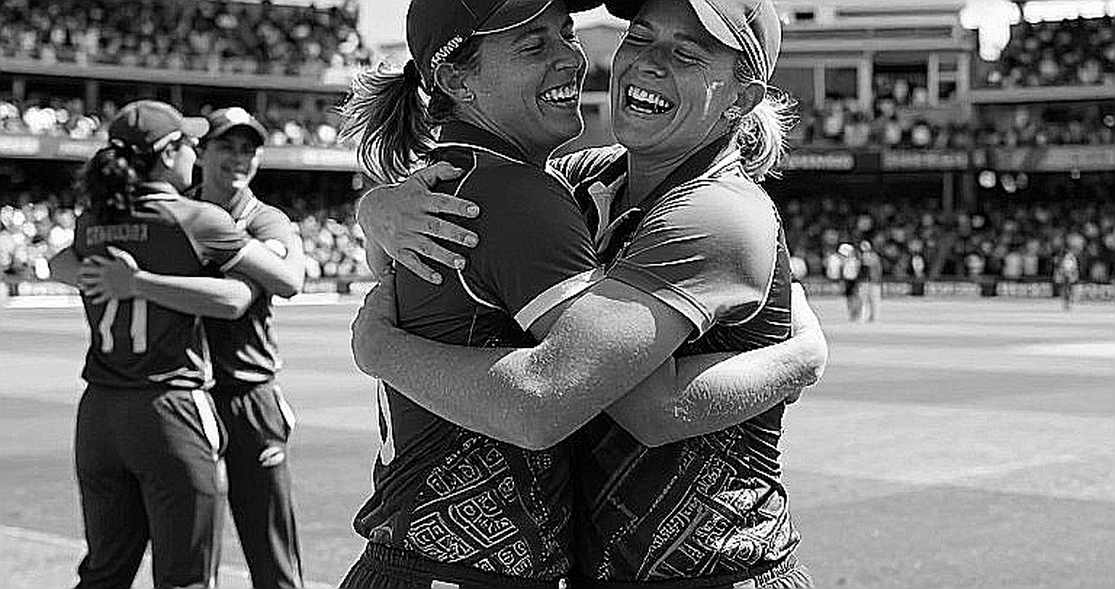
The scorecard then jumps straight to the result: 114 for 2 in 18.1 overs, an eight-wicket win, 199 balls unused.
On my desk I do not read a match. I read a match's books. And the real account of this fixture does not sit beside the 110. It sits in a line of the ICC net-run-rate regulations that never gets printed: a side bowled out is charged its full 50-over quota, however few overs it actually batted.
On that rule, Pakistan's NRR input from this match is 110 ÷ 50 = 2.20 runs per over. Sri Lanka's is 114 ÷ 18.17 ≈ 6.28. A clean gap inside a single fixture — roughly 4.08 runs per over. The headline error is to file 110 away as a bad day. In the ledger it is a four-fold damage, and if the final's second slot ever falls to a tie-break, that is the number that speaks first.
CONTEXT: WHAT SOLD IN LAHORE AND WHAT DID NOT
This was a league-stage fixture of a tri-nation series, played in Lahore, in the fifty-over format — and Pakistan's status as host changes the meaning of everything. Being bowled out for 110 at home is one thing; being bowled out for 110 at home when no pitch report survives into the record is another. The report I have contains not one sentence on the surface. No grass, no pace, no lights, no dew. Which means I cannot establish whether 110 was a par, chaseable total on that strip or a straightforward batting failure. This is the largest analytical blind spot in the entire file, and I will not write around it.
The toss is on the record. Sri Lanka chose to bowl first and rolled the opposition for 110 inside 25.3 overs. The old South Asian day-night template — bowl first, chase under dew — fits the decision. But I will not present a template as a fact. The report does not even give a start time, so the inference stays an inference.
The most important background fact sits in the previous match. Pakistan's tenth wicket put on 89 runs there — a record. If the last line of an organisation's accounts is the only thing generating profit, the question is not about profit but about structure. That 89 was not a recovery; it was a receipt for top-order failure. Against Sri Lanka the same structure reappeared, and this time no receipt was issued.
Third, the tournament arithmetic. The report says Pakistan's defeat eliminated England and that the final will now be Pakistan against Sri Lanka on the coming Sunday. The same report carries no points table and no NRR figure. The causal link between Pakistan's result and England's exit is therefore unverified — a claim, not a finding. I will label it as a claim.
Fourth, and most quietly ignored: the reliability of the numbers. A chase completed in 18.1 overs leaves 191 balls, not 199. An eight-ball discrepancy looks small, but if the ball-count slips in one place, every figure needs re-checking — especially the ones I am calculating myself. Where the paper trail stops, I do not fill the gap with atmosphere. I say the trail has stopped.
CORE: ONE BOWLER'S ANGLE, ONE TEAM'S QUOTA
For years I have kept a separate notebook for the first ten overs of one-day bowling, because in the fifty-over format the result is most often built inside that window. Pakistan were 23 for 2 in the powerplay — both openers gone. Through the middle the same innings read 61 for 5. The death-overs phase never arrived, because the innings ended before it.
Madushanka's 5 for 34 is the only genuinely decisive individual performance in this innings, and it does not mean Sri Lanka won the innings — it means Pakistan forfeited it. Five of ten wickets in one bowler's column usually indicates that he found one sustained, exploitable weakness — angle, movement or length — rather than a bowling unit producing a collective masterclass. Sahan Arachchige's 2 for 24 in a support role is consistent with a spearhead-plus-support reading.
A left-armer, over the wicket, delivering a path away from a right-handed batter brings slip and LBW into play. That is not pace. That is angle. And angle repeats. Pakistan were 23 for 2, which suggests most of the five fell in the new-ball phase rather than in a death-overs yorker exhibition. If that holds, Madushanka should be valued as a powerplay wicket-taker, not a death specialist. This is inference, and I will call it inference — the report gives no overs bowled, so his economy rate cannot be computed at all. In the fifty-over format, par economy sits around 5.5 to 6.0. A figure of 5 for 34 is not an economy rate.
The same mathematical gap runs through the batting. Babar Azam top-scored with 29. The report says he "again failed to play a long innings." Both statements can be true — 29 is a failure by his own standard and the team's best score. But the word "again" asserts a trend, and the report supplies no sequence of scores, no time period, no format split. Across 26 years of reporting I have seen this as the single most common lapse: narrative momentum outrunning evidence, with one adverb doing the work of a dataset. Babar's decline may be real. This file does not establish it.
The most interesting technical signal in the innings is Kamindu Mendis's unbeaten 62 off 42 balls — a strike rate near 147.6. That is a T20 number, not the ODI par of 85 to 95. The condition attached to it is essential: a target of 114 with 199 balls in hand meant risk cost almost nothing. The innings proves aggressive intent. It does not prove that the same tempo survives scoreboard pressure. Sri Lanka's batting from positions five to seven never came to the crease in this match. Pavan Ratnayake finished 23 not out, but even his balls faced are missing from the record.
Read the game as a contract file and the biggest discovery is in team composition. Pakistan's XI included Arafat Minhas (1 for 23) and an opener rendered as "Maaz Sadaqat," transliteration uncertain, alongside seniors like Babar Azam and Fakhar Zaman. That suggests this tri-series is not only a trophy hunt but a selection audition. With no squad list available, the conclusion stands on weak ground, and I am treating it as weak.
The commercial lens belongs here, because the biggest market signal in this match is not on the scoreboard. Left-arm pace is a scarce auction archetype; every purse pays a premium because supply is thin. A career-best five-wicket haul in a broadcast ODI re-prices that premium faster than the underlying data would justify. That is precisely where commercial value and sporting value separate. And I will say plainly: having seen the gap, I will not call this a breakout until three to five more ODIs of data exist.
One thing nobody should have left out of this report, and should have led with — the NRR. Under the all-out rule, the 110 is booked against fifty overs, which converts a scoreboard gap of 110 to 114 into a rate gap of 2.20 against 6.28 per over. The true size of the defeat is not in the scorecard; it is in the tie-break column. If a points table surfaces, Pakistan will look worse there than 110 and 114 for 2 suggests.
There is a contradiction inside the arithmetic. Pakistan's attack did take two wickets in a 114 chase, so the new-ball effort was not empty; Arafat Minhas's 1 for 23 is the only numerical trace of that side of the ledger. But an 18.1-over sample is too small to judge either attack. I will not put a suspended verdict on the ground to make the page look complete.
CONTRARIAN: THE STORY THAT RAN, AND THE PAPER THAT EXISTS
The official story is tidy: Pakistan's batting collapsed at home, Babar failed again, and a Sri Lankan quick emerged. Not one of those three claims is fully supported by this file, and that is the real blind spot.
First, the absent pitch evidence. Without a pitch report you will never know whether 110 was the surface or the technique. Strip that one input out and a third of every conclusion about Babar's form and Pakistan's batting structure sits in darkness. The coverage did not mark the darkness, because the story needed light.
Second, England's elimination. The report attributes it to Pakistan's defeat. Logically that sentence is incomplete. If England had already lost both their matches, Pakistan's result was irrelevant to their fate. Without a points table the causation is unproven. And the larger story gets dropped right there: a top-tier one-day side exited a South Asian tri-series, which fits the well-documented pattern of English condition-sensitivity away from home. That is a bigger story than Pakistan's 110.
Third, Sri Lanka's "momentum." Eight wickets and 199 balls spare looks emphatic. But chasing 114 never tested the middle-overs and death-overs machinery. Sri Lanka won this match with the ball and learned nothing about their batting. If Pakistan post 250-plus in the final, Sri Lanka's batting faces its first genuine examination of the tournament — and there is no prior data for that examination anywhere in the record.
Fourth, the price of a "breakout." A career-best five-wicket haul is a real achievement. Turning it into "world-class one-day bowler" needs data this report does not contain: career ODI average, economy, new-ball versus death splits, injury history. A left-arm quick's value is contingent on staying fit, and the report does not even list his overs bowled, so workload cannot be estimated. Any market that prices him off this one haul is running ahead of its own data.
Fifth, and most important, honesty. One-sided scorelines arrive with lazy suspicion attached. Here a clean technical explanation exists: new-ball movement plus top-order technical vulnerability. 110 in 25.3 overs and 114 for 2 in 18.1 are entirely plausible cricket outcomes in bowler-friendly conditions. The report records no rain, no DLS revision, no DRS controversy, no over-rate sanction. I will write it as it is — a clean result.
And one point nobody makes: the diagnostic value of this match is limited because the sample is one innings. Overs bowled are missing, balls faced are missing, strike rate cannot be computed, economy cannot be computed. Conclusions built on metrics that cannot be computed get labelled unverified. That is not the reader's weakness. It is the report's.
TAKEAWAY: THE FIRST TEN OVERS NEXT SUNDAY
The dominant risk is not the defeat. It is the repeatability of the defeat. Pakistan were beaten by an identifiable mechanism — left-arm new-ball pressure producing 23 for 2 — and the same attack, at the same venue, arrives in roughly a week. The interval is long enough for a technical patch and too short for a rebuilt batting order. Expect a patch, not a fix.
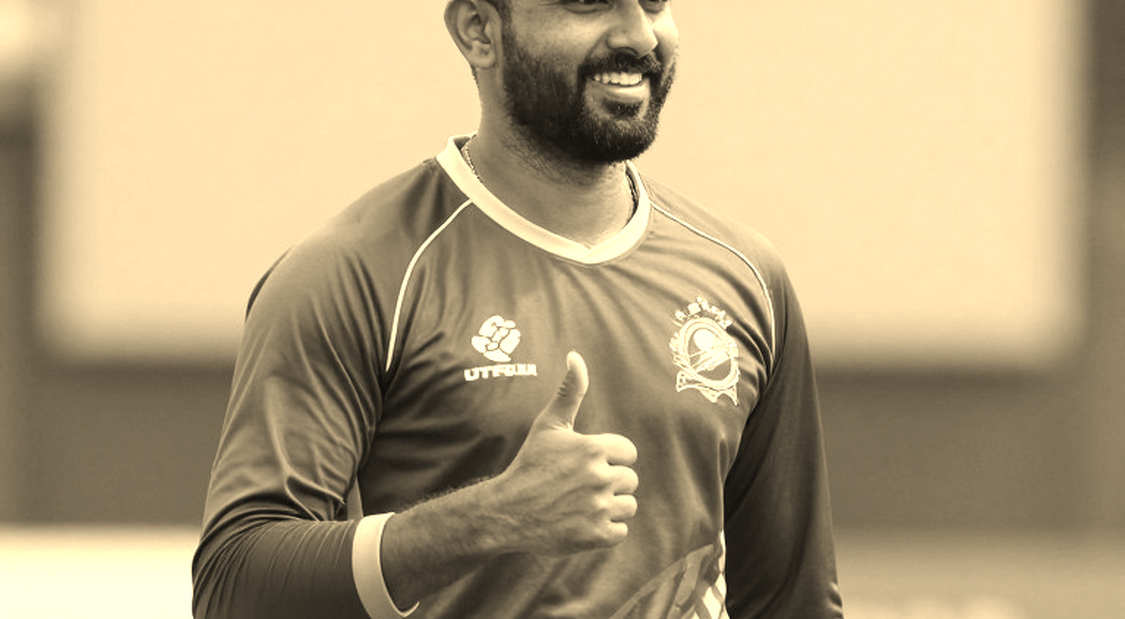
Three things I will watch in the final. One, Pakistan's first ten overs: two more wickets down inside the powerplay confirms the weakness is structural rather than a one-off. Two, the opening combination: a left-hand/right-hand pairing would signal a deliberate answer to the angle. Three, Sri Lanka's top three against a target above 200, because their batting depth has not been stress-tested in a single match of this tournament.
As for the NRR — if any tie-break arithmetic becomes public, read it first. Pakistan's damage read 110 on the scoreboard. In the ledger it is 4.08 runs per over. And if, in the final, you sense Pakistan choosing to bowl first because their net run rate is on their mind, remember: nobody printed that worry today, but it had already been filed.