
429 and 154/9: One Timestamp Behind England's Twin Collapses, and McCullum's Incomplete Diagnosis
**मुख्य उत्तर:** इंग्लैंड की दोनों हारों का मूल कारण बल्लेबाज़ी नहीं, 41वें से 50वें ओवर की गेंदबाज़ी और फ़ील्डिंग है। कोच ब्रेंडन मैकुलम इसे मनोबल की समस्या बताते हैं, जबकि स्कोरकार्ड निष्पादन की समस्या दिखाता है। **मुख्य तथ्य:** - लाहौर में पाकिस्तान ने 154/9 से 241 का पीछा जीता; शादाब ख़ान 113 नाबाद रहे। - रावलपिंडी में इंग्लैंड 429 रन बनाकर भी नहीं बचा; यह आंकड़ा अभी अपुष्ट है। - त्रिकोणीय सीरीज़ में इंग्लैंड का रिकॉर्ड 0-3; मंगलवार को श्रीलंका के ख़िलाफ़ NRR अहम। - इंग्लैंड की XI में केवल चार खिलाड़ियों के पास ODI वर्ल्ड कप अनुभव है, सात के पास नहीं। - अगला बड़ा लक्ष्य 2027 विश्व कप, दक्षिण अफ़्रीका; कैलेंडर पर बारह महीने। **स्रोत:** ब्रेंडन मैकुलम की मैच-उपरांत प्रेस कॉन्फ्रेंस पर आधारित वायर रिपोर्ट; बायलाइन और मूल प्रकाशन तिथि उपलब्ध नहीं। 429 वाले आंकड़े की स्थिति: अपुष्ट, इसलिए ऑन-रिकॉर्ड सत्यापन नहीं जोड़ा गया। **संबंधित प्रश्न-उत्तर:** प्रश्न: इंग्लैंड की असली समस्या क्या है? उत्तर: डेथ ओवरों में गेंदबाज़ी निष्पादन — यॉर्कर की सटीकता, वैरिएशन और आख़िरी बल्लेबाज़ों के लिए फ़ील्ड सेटिंग। प्रश्न: शादाब ख़ान का शतक कितना निर्णायक है? उत्तर: बेहद मूल्यवान, पर n=1 — नंबर आठ पर शतक दुर्लभ टेल-इवेंट है और पाकिस्तानी बल्लेबाज़ी गहराई का सामान्य प्रमाण नहीं। प्रश्न: इंग्लैंड के लिए अगला मोड़ क्या है? उत्तर: मंगलवार को श्रीलंका के ख़िलाफ़ NRR-अहम मुकाबला, जो उसी हाई-वेरिएंस अंदाज़ को मजबूर करेगा जो पहले ही विफल हुआ।
In Lahore, Pakistan were 154 for 9, chasing 241, the last pair at the crease, roughly 88 still needed. What followed went into the books as Shadab Khan's 113 not out — a hundred from No. 8, only the third such innings in ODI history. Four days earlier in Rawalpindi, England had made 429 batting first and lost that match too. Two totals, 429 and 241, both surrendered while defending. The same window failed both times: overs 41 to 50.
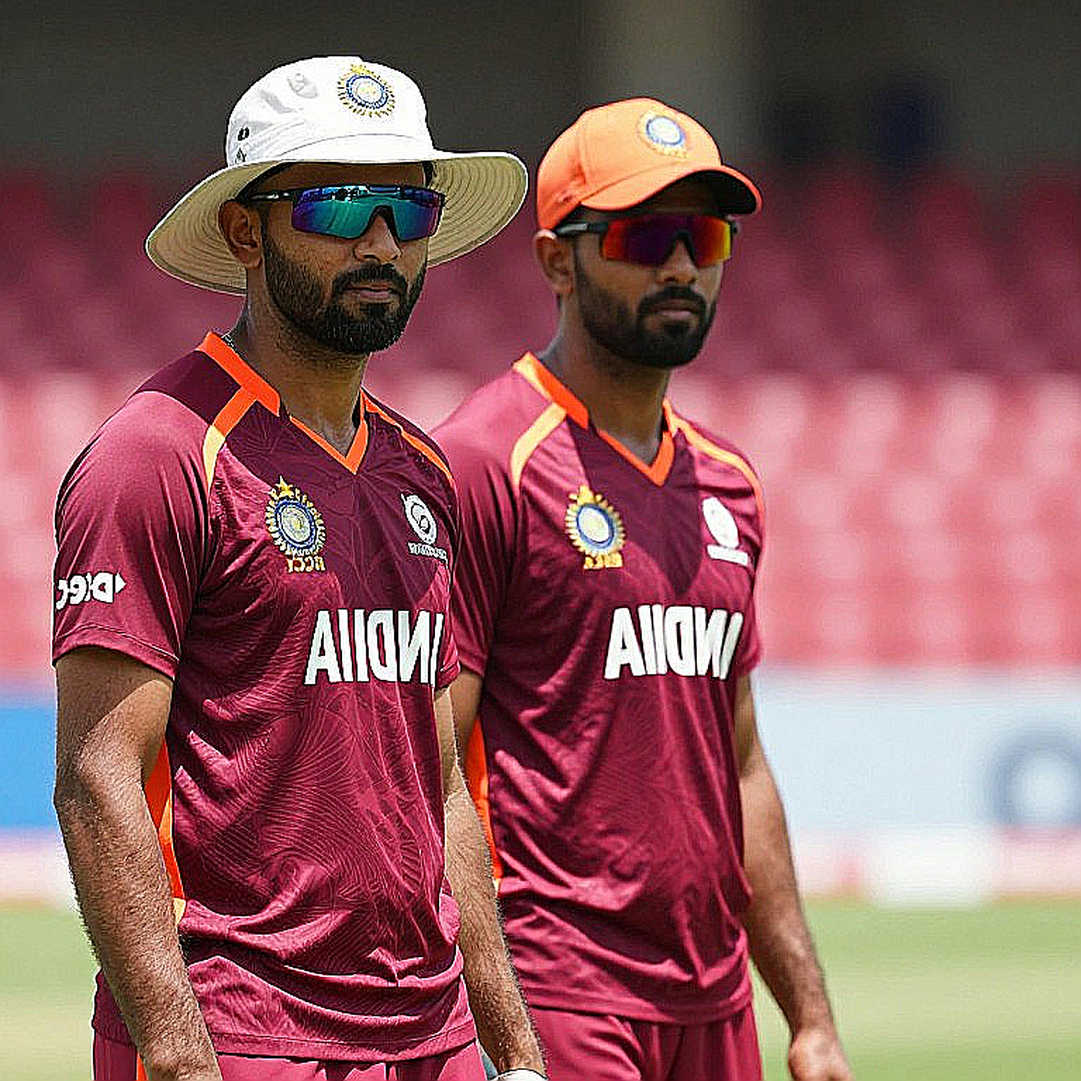
I rebuilt both innings from the scorecard, not the highlight reel — from timestamps.
One disclosure first. The 429 reaches me through a single report with no byline and no dateline. A successful 430 chase would rank among the two or three largest in ODI history: either it is a genuinely historic collapse, or a DLS-revised target, or a transcription error, and those three readings lead in different directions. I will not use it as a load-bearing fact, and I will not bury it either. Until it is corroborated, the weight of this piece sits on Lahore, which is internally consistent.
This is an ODI tri-series in Pakistan — England, Pakistan, Sri Lanka. The substance of Brendon McCullum's press conference is that the defeats were not bad luck but not good enough, and that twelve months on the calendar there is a big World Cup in South Africa. The 2027 tournament turns this series from practice into an audit. England's record reads 0-3. Harry Brook captains, and only four of the XI have played an ODI World Cup; seven have not. England's fourth fixture, against Sri Lanka on Tuesday, keeps net run rate live.
The first thing the numbers make plain: England's batting is not the problem. 429 and 241 both mean a functioning top and middle order. The fault sits on the bowling and fielding axis, and specifically in the last ten overs. That is the phase where a fifty-over match is actually decided, and it is the phase England fell over in twice.
The second thing McCullum himself concedes: the two defeats were not the same. One asked England to defend a huge total, the other a small one. Two dissimilar failures do not return a single diagnostic signal. They tell you the closing phase is broken, not why. A 430 chase does not happen without fielding error — dropped catches, a missed run-out, a defensive field under pressure. The other defeat needed one wicket, and it did not come even against No. 11.
The third point is where I part from McCullum. His stated remedy is cognitive: stay calm, keep our poise, plot and plan. The evidence points at execution — yorker accuracy, death-over variation, catching under pressure, field placement to the last batter. Framing a skill deficit as a temperament deficit is the single biggest risk in his public position. Staying calm has never taught anyone to bowl a yorker.
The fourth point is the same data poverty I run into in domestic cricket, wearing different clothes. Nowhere in the report is there death-over economy, yorker percentage or dropped-catch data for a single England bowler. The unit on which the entire story rests has no individual record at all. The absence is a finding in itself, and I am filing it as one.
The fifth point is Shadab's innings. It is magnificent, and it is n=1. A hundred at No. 8 is a tail event, occurring once in a year or two across all ODI cricket — treating it as proof of Pakistan's batting depth is a category error. And the lesson McCullum drew from it — manipulating access to the ball, batting with the tail — is a batting lesson. England's failure was bowling to No. 8 and No. 11. The lesson the team needed was not the one the coach took.
The sixth point is sample size. I set the threshold before the analysis began: ten death-over innings. I have two. So I accept the pattern of the outcome — twice losing from a winning position is a recurring defect, not noise — while declining the contract on the cause. Writing insufficient is also a result.
The seventh point is the toss. Both defeats came batting first, both times the chasing side won, and the toss does not appear in the press conference at all. Evening dew in Lahore degrades spin grip and seam control alike; that is inference, not confirmation, but dismissing it also requires data that is not here.
The eighth point is Brook. He is at once the least experienced captain in the room and one of only four players who have been to an ODI World Cup. That is a structural contradiction: the leadership reference group is too small to lean on, and the experience that exists sits in the batting, which is not where England are hurt.
Now the counter-intuitive reading. Four players with World Cup experience is a coach's rhetorical device, not a capability audit. Two of those four are batters, Root and Brook. England lost with the ball. The unit that needed the deepest pressure experience is the emptiest one. England have bought their experience insurance in the wrong department.
The second reverse angle: it is easy to close the file by calling Shadab's innings a miracle. The harder questions are how many yorkers the last pair faced, where the fielders stood, which catches went down. The highlight reel edits those questions out. The log remembers what the reel cuts.
Third: if England deliberately rotated through this series — seven players without World Cup caps point that way — then 0-3 is the price of preparation, not a crisis. That is inference. Confirming it would mean matching the playing XIs against a stated workload plan, which I do not have.
Tuesday against Sri Lanka keeps net run rate live, and that is the real danger: the need for a big margin pushes England back towards the same high-variance approach that has already failed twice. Next time I will log three things — whether a specialist yorker bowler plays; what the field looks like to the last two batters; and whether McCullum's language shifts from staying calm to fixing skill.
The South Africa clock is twelve months out. If death-over economy holds where it is across the next three matches, the question stops being about temperament and becomes about technique — and the answer to that will be found in the practice session the cameras do not attend.